Topic 02
Promoting Nurturing Care through PHC



Sign up for our monthly newsletter R4D Insights to get the latest tools, resources, and news in global development.
Strengthening Primary Health Care
to Promote Optimal Child Development

Topic 02
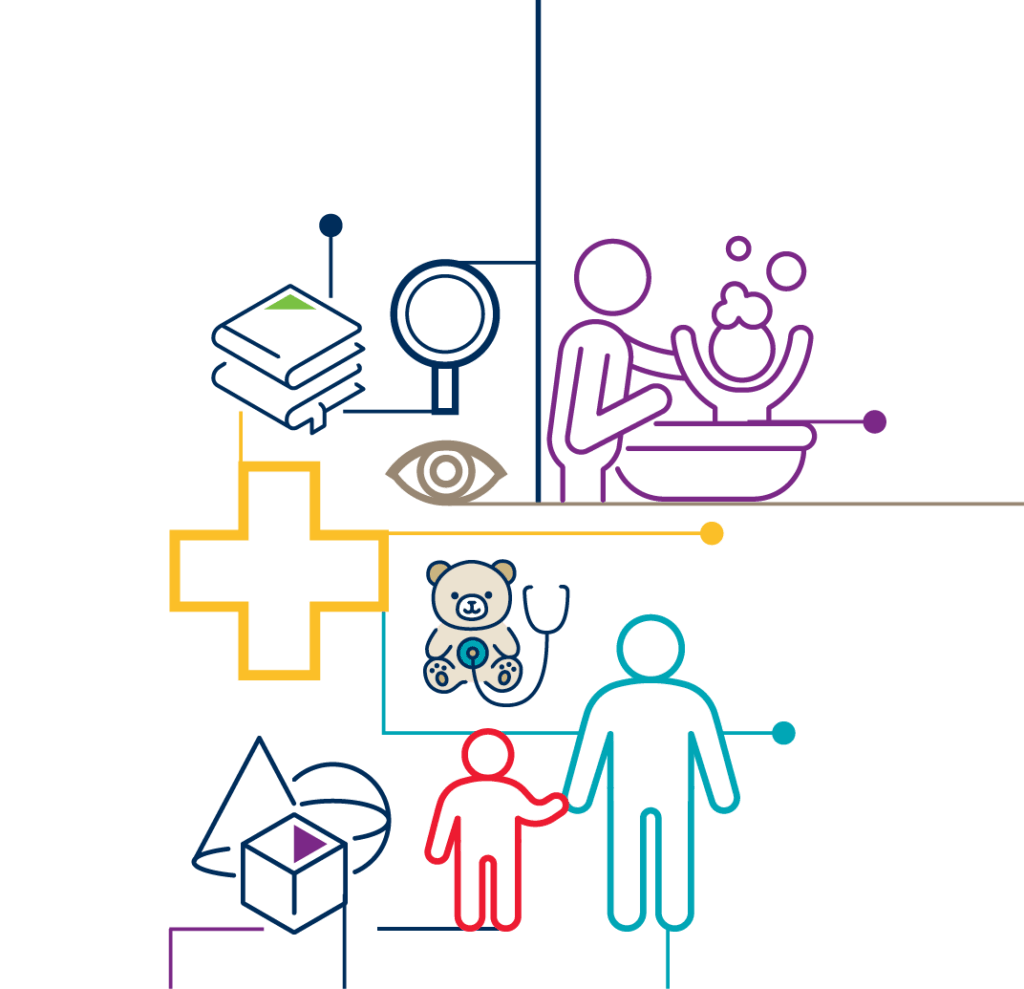
The Nurturing Care Framework (NCF) for Early Childhood Development was published in 2018. Nurturing care has five components: (1) good health, (2) adequate nutrition, (3) responsive caregiving, (4) opportunities for early learning, and (5) safety and security.
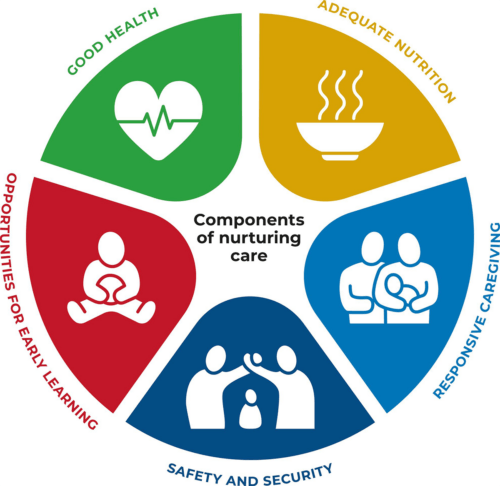
Components of nurturing care
The toolkit also addresses cross-cutting areas including caregiver well-being and developmental monitoring and counseling.
Health workers can help caregivers build more responsive relationships with young children by:
Routine checkups during pregnancy to monitor maternal and fetal health.
In South Africa, the Healthy Pregnancy, Healthy Baby study gave mothers a baby book with fetal development information, maternal well-being tips, and an ultrasound image to keep — promoting nurturing care from early pregnancy.
Visits from birth through six weeks postpartum to support maternal and child health.
A PATH and APHRC study in Siaya County, Kenya trained health workers to integrate ECD counseling and developmental screening into routine immunization visits.
Regular preventive check-ups to monitor child health and development.
A study in India trained health workers to promote nurturing care in growth monitoring sessions, equipping them with counseling cards, flip charts, and videos to guide caregiver education.
Individual coaching sessions with a health provider, often offered alongside well-child visits.
The Smart Beginnings Model in the U.S. pairs families with coaches who observe parent-child interactions and provide personalized feedback to strengthen caregiving.
Structured sessions where health workers deliver counseling and supportive messages to multiple caregivers at once.
A study in Bangladesh delivered 25 biweekly play sessions at government clinics, incorporating songs, picture books, toys, language activities, and nutritional guidance.
Age-appropriate toys and materials placed in facility waiting areas, with health workers on hand to facilitate play and provide responsive caregiving guidance.
With guidance from PATH, Kenya and Mozambique implemented play boxes, improving caregiver experience and increasing service utilization.
Mobile apps, SMS, or chatbots used to share parenting support with caregivers between visits.
UNICEF’s Bebbo app offers guidance on nutrition, play, and child development up to age 6, with expert content and interactive tools available in 15 countries across Europe and Central Asia.
Posters, booklets, and flyers displayed in facilities or distributed to caregivers to reinforce nurturing care messages.
In Indonesia, growth monitoring posters at a village health center improved parent knowledge, attitudes, and behavior around child development and motivated independent monitoring at home.
Community health worker-led sessions that deliver counseling to multiple caregivers at once, fostering peer connections and shared learning.
A study in Indonesia embedded parenting and psychosocial stimulation messages into twice-weekly nutrition rehabilitation sessions at community centers, resulting in lower maternal stress and higher dietary diversity among children under 2.
Community health workers visit caregivers at home to provide tailored coaching based on direct observation of caregiver-child interactions.
The Reach Up and Learn program — adapted from the Jamaica Home Visit intervention — trains health workers to build responsive caregiving skills and has been successfully implemented in Bangladesh and Colombia.
Radio and television used to reach caregivers with nurturing care messages at scale.
South Africa’s Side-by-Side Campaign combines a radio drama in nine languages, SMS-based messaging for mothers, a family health booklet, and printed materials to promote caregivers’ role in early childhood development.
Mobile apps, SMS, or chatbots used to share parenting support with caregivers between community worker visits.
The Side-by-Side Campaign’s MomConnect platform delivered health and development messages directly to pregnant women and new mothers via SMS.
Posters, booklets, and flyers displayed in community spaces or distributed to caregivers to reinforce nurturing care messages.
The Side-by-Side Campaign distributed a Road to Health booklet to families at birth — used by community health workers to track growth and immunization — alongside printed nurturing care guidance in all 11 official languages.